
Found a Flea? The Answer to “Where” Starts with “When”
You’re relaxing on the couch with your dog, or brushing your cat, and there it is: a flea. Your first thought is probably “Where did that come from?” followed quickly by “When did that happen?”
The answers surprise most people. Fleas are experts at sneaking in and staying hidden. The flea you found today most likely stems from an intrusion weeks ago.
Fleas can come from almost anywhere
Fleas prefer warm, moist environments, but they can survive cold, dry conditions for long stretches, especially in their protected pupal stage. Adult fleas squeeze through tight spaces, jump surprisingly long distances, and are happy to hitch a ride.
That’s why indoor-only pets get fleas too. Fleas come in on our shoes and clothing, with visitors, in suitcases after travel, from neighboring apartments, and from wildlife living in crawl spaces, under decks, or in attics. Veterinarians regularly find fleas on cats that have never set a paw outside.
Fleas are good at hiding
Veterinarians commonly use a flea comb to look for flea dirt: black particles that are actually flea feces. We do this even when there are no signs of fleas. Why? It’s very common not to know a pet has fleas. Many times, the pet isn’t scratching, nobody in the house is getting bitten, and no one has seen a flea.
Dogs that are allergic to fleas may scratch intensely after a single bite, but most dogs show no signs until there are a lot of fleas. Cats are even harder to read. They may groom a little more than usual, which is easy to miss. And because cats are such meticulous groomers, they remove many of the adult fleas and most of the flea dirt.
Fleas also greatly prefer our furry friends to us. People usually don’t get bitten until there are a lot of fleas, or until the pets have been out of the house for days. Families coming home from vacation, with the dog still at the kennel, are sometimes inundated with flea bites. It can be the first sign of a problem that had been quietly building for weeks.
The flea you see today probably arrived weeks ago
The fleas you see are only a small fraction of the flea population. Only adults look like fleas, and most of those stay hidden in your pet’s coat. By the time you notice one, there are usually many more on your pet and in your home as adults, eggs, larvae, and pupae.
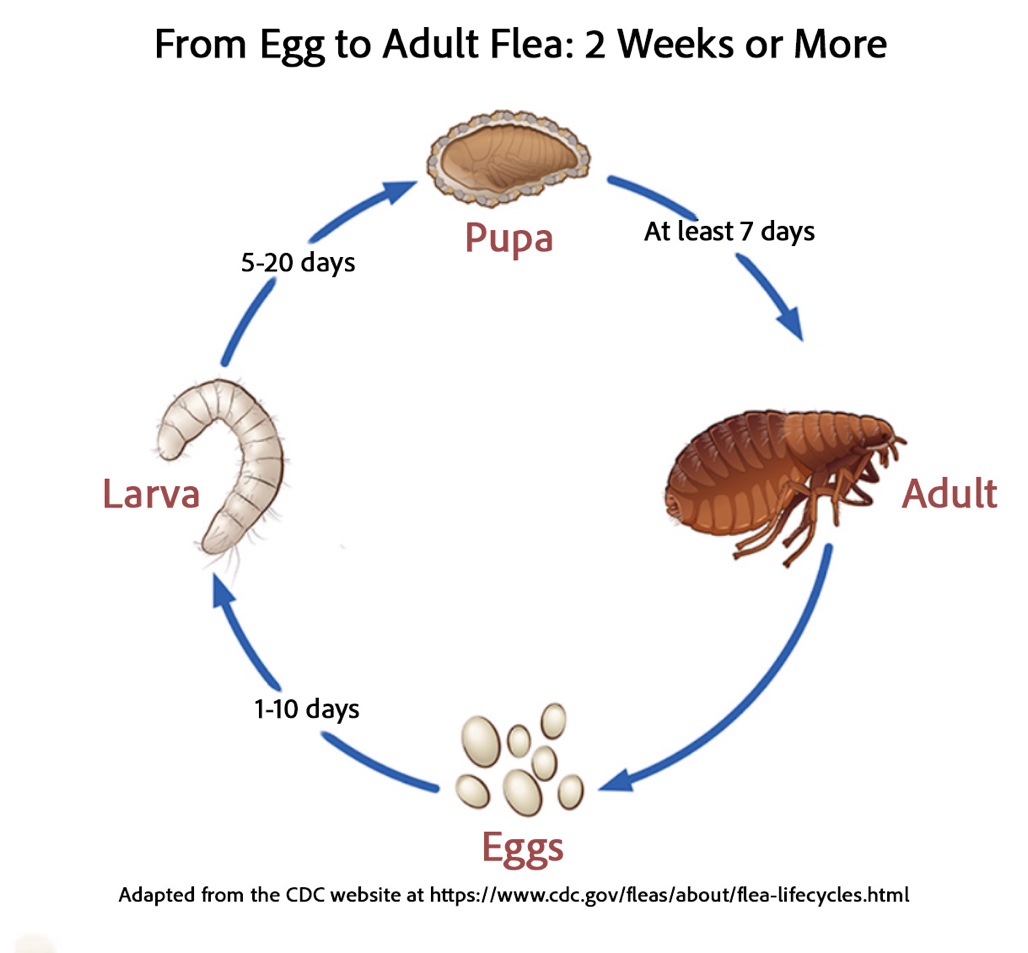
Here’s how the flea life cycle works:
- Eggs. Each egg hatches into a worm-like larva in 1-10 days.
- Larvae. These tiny creatures feed and grow for about 5-20 days before making a cocoon and developing into pupae.
- Pupae. Each pupa matures inside the cocoon and emerges as an adult a week to several months later.
- Adults. Female fleas lay many eggs a day. Some stay on your pet and others drop off into bedding, furniture, and carpeting.
Bottom line: It takes weeks for a single flea “visitor” to create enough fleas to be noticeable.
Pinpointing where fleas came from is nearly impossible
We tend to look at our pets most carefully after boarding, grooming, a trip to the park, or a hospital stay, when we’re checking for ticks, admiring a new haircut, or watching them recover. Finding a flea at these times brings obvious suspicion. But knowing more about fleas makes things clear: though there is a chance this flea is a recent hitchhiker, it is much more likely that this flea is a relative of one that invaded weeks to months ago.
Getting rid of fleas
Playing the odds, it’s smart to treat a single flea as a sign of an established infestation. Since the egg and pupal stages of fleas are resistant to pesticides, at least three months of coverage is needed to catch the emerging waves of adults until no more eggs and pupae exist.
To break the flea cycle:
- Treat every pet in the house with a quality flea product, including pets with no signs of fleas. Examples include NexGard for dogs and Parasedge Multi for cats, but there are many others. Flea products are pesticides. They are considered safe for most pets when used as directed, but some pets do have side effects, so talk with your veterinarian about which product is right for yours. Never use a dog flea product on a cat; some can be deadly to cats.
- Make sure you continue preventive coverage for all pets for at least three consecutive months, even after you stop seeing signs of fleas. There are some products that last a full three months while others need to be applied or ingested monthly.
- If the source of the fleas is still around, like a neighbor’s infested home or a groundhog in the crawl space, flea prevention needs to continue long-term. Year-round prevention is the easiest way to keep the next flea from ever setting up a family.
Today’s products make the old routine of flea bombs, daily vacuuming, and constant laundry largely unnecessary, because properly protected pets act as living flea traps: newly emerged fleas are killed before they can lay eggs.
Prefer to avoid pesticides? A natural approach is possible, but it takes real commitment: frequent vacuuming, hot-water laundry, regular combing and bathing, and natural products, all kept up for at least three months. Some of these products aren’t safe for every pet (many essential oils are toxic to cats, for example), so talk with your veterinarian before you start.
Finding a flea is frustrating, but it’s very manageable. With quality products and a little flea science on your side, you’ll win the battle every time.